Tomato paste is one of the most widely used tomato-based food products. Below, we will introduce the complete production process of concentrated tomato paste in detail.
Concentrated tomato paste is a concentrated tomato product made from fresh tomatoes through processes such as washing, sorting, crushing, pulping, concentration, sterilization, and filling.
This concentrated tomato paste contains no additives or seasonings.
Concentrated Tomato Paste Production Process
Step 1: Tomato Receiving and Washing
After fresh tomatoes are harvested from the growing base and transported to the processing plant, they are first inspected for quality, ripeness, and foreign materials.
The tomatoes are then thoroughly washed using washing equipment to remove soil, dust, leaves, and other impurities. Proper cleaning helps ensure the quality of the raw materials and contributes to the production of high-quality concentrated tomato paste.
A bubble washing machine is one of the main types of equipment used for tomato washing.
Step 2: Tomato Sorting
Rotten, damaged, and unsuitable tomatoes are removed from the production line.
Proper sorting helps ensure the color, flavor, and overall quality of the final concentrated tomato paste.
Step 3: Tomato Crushing
The cleaned tomatoes enter a tomato crusher and are crushed into smaller particles.
Crushing releases the tomato juice and pulp while preparing the raw material for the subsequent heat treatment and pulping processes.
Step 4: Hot Break Treatment
The crushed tomatoes enter the Hot Break system for rapid heating.
Hot Break treatment helps inactivate pectin-degrading enzymes and can improve the viscosity and texture of concentrated tomato paste.
Depending on the production requirements and product characteristics, a Cold Break process can also be used.
Step 5: Pulping and Refining
After heat treatment, the tomato material enters the pulping and refining system.
The equipment separates tomato skins, tomato seeds, and other unwanted solid materials from the tomato pulp, making the tomato pulp smoother and more uniform.
Step 6: Concentration
The tomato pulp enters the evaporation and concentration system, where water is removed to increase the product concentration.
Depending on the processing requirements, vacuum evaporation and other concentration methods can be used to control processing conditions and maintain product quality.
The final concentration should be determined according to the product specifications.
Step 7: Sterilization
The concentrated tomato paste undergoes thermal treatment or sterilization to improve product safety and storage stability.
The specific sterilization temperature and processing time depend on the product and production line design.
Step 8: Concentrated Tomato Paste Filling
The processed concentrated tomato paste enters the filling system.
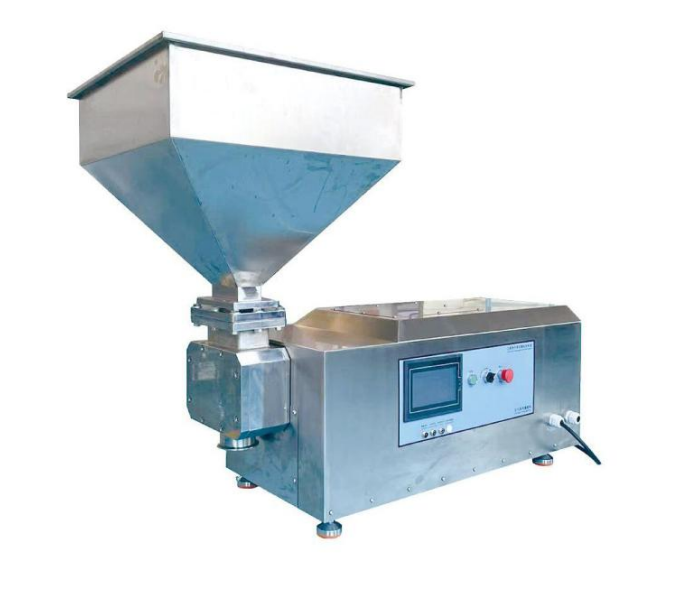
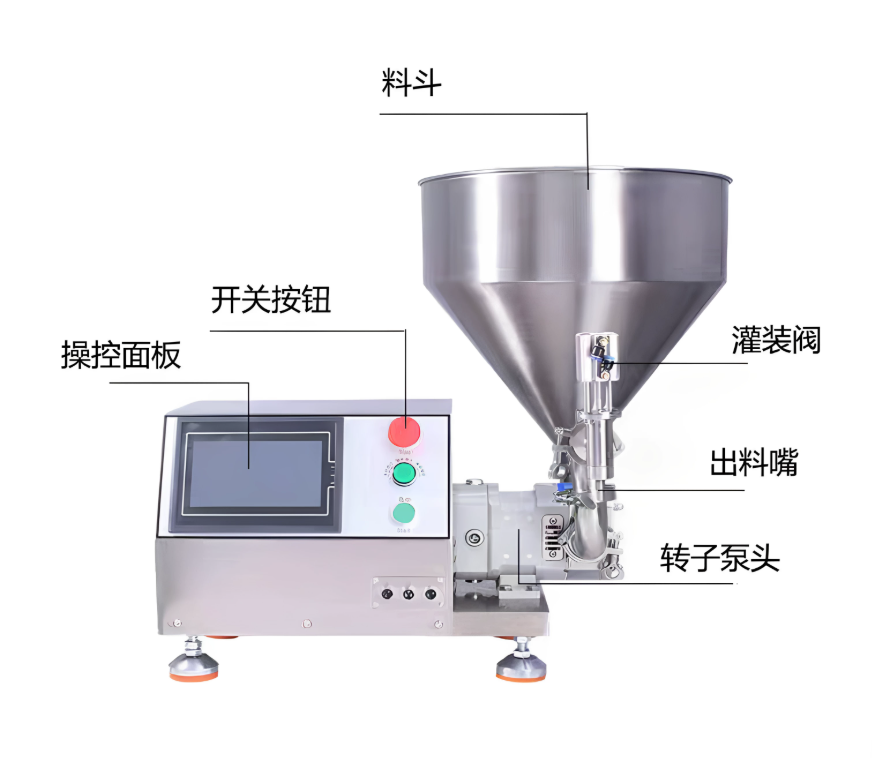
Because concentrated tomato paste is generally a high-viscosity product, the appropriate filling machine should be selected according to the material viscosity, packaging container, filling volume, and production capacity.
At present, rotary pump filling machines are widely used for high-viscosity products and are also an important filling solution for concentrated tomato paste and similar products.
Step 9: Sealing, Cooling and Packaging
After filling, the containers are sealed and cooled. The products can then be labeled, inspected, and finally packaged.
Common packaging options include:
- Cans
- Glass jars
- Pouches
- Drums Main Equipment for a Concentrated Tomato Paste Production Line
A typical concentrated tomato paste production line may include:
- Tomato receiving system
- Tomato washing machine
- Sorting system
- Tomato crusher
- Hot Break or Cold Break system
- Pulper and refiner
- Evaporation and concentration equipment
- Sterilization equipment
- Concentrated tomato paste filling machine
- Sealing machine
- Cooling system
- Packaging equipment
The exact equipment configuration should be designed according to production capacity, raw material quality, final product concentration, packaging method, and automation level.
How to Choose a Concentrated Tomato Paste Production Line
When purchasing a concentrated tomato paste production line, several factors should be considered.
Different production processes and production capacities require different processing equipment and different levels of automation.
The appropriate production line should be selected according to the actual production requirements, product specifications, packaging method, and factory conditions.
Conclusion
A complete concentrated tomato paste production line integrates tomato pretreatment, pulping, concentration, sterilization, filling, and packaging into one complete production system.
Selecting the appropriate equipment according to production capacity, product specificat