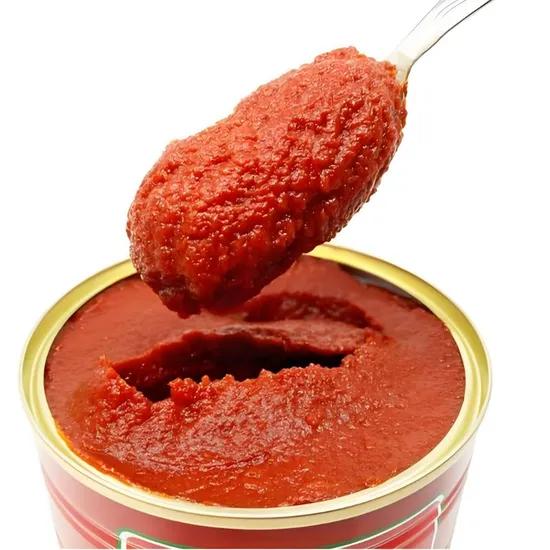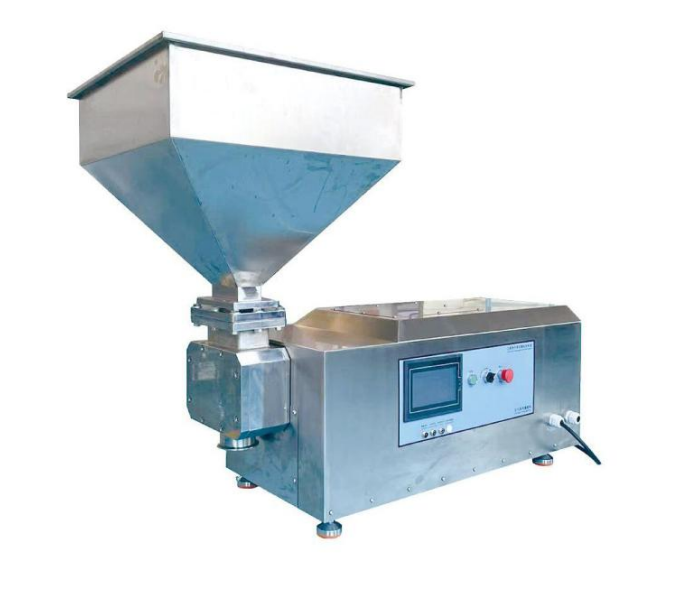
Choosing the right pump is an important part of selecting a sauce filling machine. Different pumps work in different ways, and each has its own advantages when it comes to handling thick sauces, controlling filling volumes, and keeping the flow steady.
If you need to fill chili sauce, tomato sauce, peanut butter, jam, or sauces with meat pieces, chili flakes, or other solid particles, the right pump can make a big difference. It affects filling accuracy, product quality, production speed, cleaning, and maintenance costs.
Three common options are rotor pumps, piston filling systems, and twin-screw pumps. Each works well in certain situations, so the best choice depends on your product and production needs.
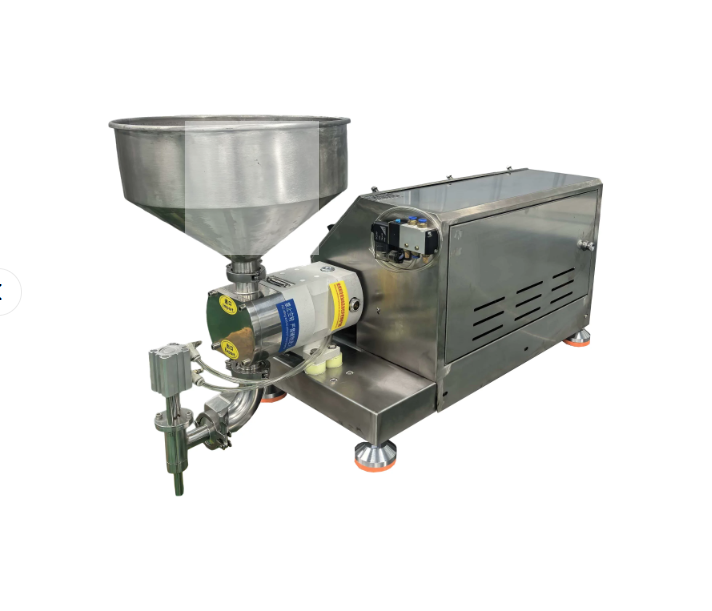
1. What’s the Difference Between Rotor Pumps, Piston Fillers, and Twin-Screw Pumps?
| Comparison | Rotor Pump | Piston Filling System | Twin-Screw Pump |
|---|---|---|---|
| Main Use | Sauce transfer and feeding | Accurate portion filling | Continuous transfer and steady feeding |
| Sauces with Solid Pieces | Depends on the rotor and flow passage design | Check valve openings and particle clearance | Check the screw design and ability to handle particles |
| How Filling Volume Is Controlled | Pump speed, flow measurement, or weight feedback | Piston stroke and control system | Pump speed, flow measurement, or a separate metering system |
| Key Factors to Consider | Particle size, viscosity, and flow rate | Filling volume, accuracy, and product properties | Flow rate, pressure, viscosity, and operating conditions |
| Typical Applications | Feeding sauces with solid pieces | Filling smooth, thick pastes | Continuous product transfer and production line feeding |
1.1 Rotor Pumps: A Good Option for Many Types of Sauce
A rotor pump uses two rotating rotors to move sauce from the inlet to the outlet. It is a type of positive displacement pump.
Here are some of its main advantages:
- Works with many types of sauces and pastes with different viscosities.
- Can handle sauces with solid pieces when the pump design and flow passages are suitable.
- Flow rate can be adjusted by changing the pump speed.
- Some models support reverse operation, depending on their design.
- The pump structure affects how easy it is to clean and maintain, as well as how well it handles solid pieces.
Keep in mind that a rotor pump does not eliminate shear forces completely. It also cannot guarantee that every piece stays intact. The result depends on pump speed, clearances, pressure, particle size, and the properties of the sauce.
If you use a rotor pump for filling, the filling volume can be controlled through pump speed, running time, flow feedback, or weight feedback. The final accuracy depends on the entire filling system, not just the pump itself.
1.2 Piston Filling Systems: A Good Choice for Consistent Filling Volumes
A piston filling system uses a piston or plunger moving back and forth to dispense a set amount of product. Depending on the design, it may use different valves and metering mechanisms.
Key advantages include:
- Suitable for many liquids, pastes, and thick products.
- Filling volume can be adjusted by changing the piston stroke.
- Works well when each container needs to receive a consistent amount of product.
- Can provide good filling repeatability when properly designed and set up.
- Valve design, seals, material compatibility, and cleaning requirements should all be considered.
Piston filling systems are not limited to smooth products, and they do not always damage solid particles. However, if your sauce contains meat pieces, chili pieces, or other solids, check whether the valve openings are large enough and whether the particles can pass through without getting stuck or damaged.
For small filling volumes where consistency is important, a piston filling system is often worth considering first. Still, the final choice should be based on the machine specifications and actual filling tests.
1.3 Twin-Screw Pumps: For Continuous Transfer and Steady Product Flow
A twin-screw pump uses two rotating screws to move product through the pump. Its performance depends on the screw design, clearances, speed, and pump construction.
Some key features include:
- Suitable for continuous transfer of various liquids and thick products.
- Some designs provide a steady flow with relatively low pulsation.
- Useful for production lines that need a continuous and stable product supply.
- Pressure range, viscosity limits, and particle-handling capability vary by model.
- Cleaning and maintenance requirements depend on the pump design.
Can a twin-screw pump handle sauces with solid pieces? It depends on the specific pump. You should check the screw design, clearances, particle size, and product characteristics before making a decision.
2. Which Pump Is Best for Your Sauce?
Case 1: Sauce with Meat Pieces, Chili Pieces, or Crushed Peanuts
A rotor pump designed for handling solid particles is a good option to consider. Other pumps specifically designed for particle-containing products may also work.
Before choosing a pump, check:
- The maximum particle size and hardness.
- The amount of solid material in the sauce and its viscosity.
- Whether the particles need to remain intact.
- Whether the pipes, valves, or filling nozzles are likely to get blocked.
- How easily the equipment can be cleaned after use.
It is not enough for a pump to move the sauce. You also need to make sure the particles remain in acceptable condition after passing through the pump and filling valve.
Case 2: Smooth Paste That Needs Consistent Filling
For smooth, uniform products, a piston filling system is often a good place to start.
Examples include some types of tomato sauce, smooth seasoning sauces, cosmetic creams, and other uniform pastes.
If you need to fill small amounts with good repeatability, a piston-based system is worth considering. For very thick products, however, you should also check the machine’s drive capacity, filling speed, valve design, and actual filling accuracy.
Case 3: High-Volume Transfer or Production with Multiple Products
If your production line needs to move large volumes of sauce steadily, compare rotor pumps and twin-screw pumps.
For production involving different products, you should also consider:
- How often you switch between products.
- How long cleaning and disassembly take.
- How the flow rate changes with different viscosities.
- Whether product transfer and filling should be handled by separate systems.
If every bottle needs to reach a specific weight, you can use a pump to supply the product and a separate filling system with weight feedback to control the amount dispensed into each container.
However, weight feedback alone does not guarantee accurate filling. The system also needs suitable sensors, proper control settings, a stable product supply, and regular calibration.
3. Five Things to Check Before Choosing a Pump
1. Product Viscosity
Provide the viscosity of your sauce at its actual operating temperature. Some products do not flow like ordinary liquids, and their viscosity can change depending on how they are handled. One viscosity reading may not tell the whole story.
2. Particle Size and Content
If your sauce contains meat pieces, crushed peanuts, chili seeds, or fruit pieces, tell the manufacturer the maximum particle size, the amount of solid material, and whether the particles need to remain intact.
3. Filling Volume and Accuracy
Be clear about how much product each container needs to hold and how much variation you can accept. You should also decide whether filling will be controlled by volume or by weight.
4. Production Speed
Let the manufacturer know how many containers you need to fill per minute or per hour. Also explain whether you need continuous feeding, intermittent filling, or integration with an automatic packaging line.
5. Cleaning and Hygiene
For food products, check the materials that come into contact with the sauce, the cleaning method, the risk of product buildup, and how easy the machine is to take apart for maintenance.
If you frequently switch between different sauces, easy cleaning can save a lot of production time.
4. How to Reduce the Risk of Choosing the Wrong Pump
The best way to choose a pump is not to rely only on a sales description. Whenever possible, test the equipment using your actual product.
When asking a manufacturer for a quotation, provide:
- A sample of your sauce and basic product information.
- The maximum particle size and viscosity.
- The target filling volume per container and acceptable error.
- Your target production capacity per hour.
- The container dimensions and opening diameter.
During the filling test, check filling consistency, particle condition, filling speed, dripping, the risk of blockages, and cleaning performance. Record the test conditions so you can compare different machines fairly.
If high filling accuracy is important, repeat the test under conditions close to your actual production environment. One successful test is not enough to confirm long-term performance.
Conclusion
Rotor pumps, piston filling systems, and twin-screw pumps each have their own strengths.
- Sauces with solid pieces: Check particle clearance and product integrity. A suitable rotor pump is one option to consider.
- Smooth pastes that need consistent filling volumes: Start by evaluating a piston filling system.
- Continuous transfer and steady feeding: Compare rotor pumps and twin-screw pumps in terms of flow rate, pressure, and cleaning requirements.
- High production output with tight filling tolerances: Consider the complete system, including the feed pump, metering mechanism, weight feedback, and production line controls.
The best pump is not necessarily the most advanced or expensive one. It is the one that handles your actual product reliably and meets your filling requirements under real production conditions.